Keeping Dogs Safe when the weather is hot; Heat Exhaustion, Hot Pavement and Cooling Tips

A warm, sunny day can turn dangerous for a dog faster than many people expect. Dogs do not cool off the way humans do, and they can overheat during a short walk, a backyard play session, or even a car ride with poor airflow.
Heat safety is not only a summer issue. High humidity, direct sun, hot pavement, thick coats, limited shade, and too much activity can all put stress on a dog’s body. The good news is that a few simple habits can make hot days much safer.
This guide covers heat exhaustion in dogs, paw protection, hydration, safe outdoor routines, long-haired breed care, sunburn risks, and what to do if a dog shows signs of overheating.

Why dogs overheat so quickly
Dogs release heat mostly through panting. They also sweat a small amount through their paw pads, but not enough to cool their whole body the way human sweating does. When the air is hot, humid, or still, panting becomes less effective.
That is why a dog can become overheated even when the temperature does not seem extreme. A day in the 80s can be risky if the humidity is high, the sun is strong, or the dog is exercising hard.
Certain dogs need extra caution in the heat:
Puppies and senior dogs
Overweight dogs
Dogs with heart or breathing problems
Short-nosed breeds such as Bulldogs, Pugs, Boston Terriers, Boxers, and Shih Tzus
Dark-coated dogs that absorb more heat from the sun
Long-haired or double-coated breeds
Dogs that are not used to warm weather or exercise
Heat exhaustion is not something to “wait out.” If a dog’s body temperature keeps rising, the situation can progress to heatstroke, which is a medical emergency.
What heat exhaustion in dogs looks like
Heat exhaustion happens when a dog’s body struggles to cool itself. It often starts with heavy panting and restlessness, then can become more serious if the dog stays in the heat or keeps moving.
Common causes include:
Walking or running during the hottest part of the day
Playing fetch or exercising too long in warm weather
Being left in a parked car, even briefly
Staying outside without shade
Not having enough cool water
Walking on hot pavement
High humidity that makes panting less effective
Wearing heavy gear, clothing, or poorly ventilated carriers
Watch for early signs before they become severe. A dog may slow down, seek shade, refuse to keep walking, or seem unusually anxious. Heavy panting that does not ease with rest is a warning sign.
More concerning signs include:
Excessive drooling
Bright red, dark red, pale, or bluish gums
Rapid heartbeat
Weakness or wobbling
Vomiting or diarrhea
Confusion or disorientation
Collapse
Seizures
If a dog collapses, cannot stand, has seizures, or seems confused in the heat, treat it as an emergency and contact a veterinarian right away.
Hot pavement can burn paws
Air temperature does not tell the whole story. Pavement, asphalt, concrete, sand, and artificial turf can become much hotter than the surrounding air. These surfaces absorb and hold heat, especially in direct sun.
A dog’s paw pads are tough, but they are not burn-proof. Hot surfaces can cause pain, blisters, peeling, redness, and raw patches. Paw burns can also make a dog reluctant to walk, which may be mistaken for stubbornness or fatigue.
How to test surface temperature
Use the seven-second hand test before walking on pavement. Place the back of your hand or your bare palm on the surface for seven seconds. If it is too hot for your hand, it is too hot for your dog’s paws.
You can also step on the surface barefoot. If you would not comfortably stand there, your dog should not walk there.
For safer walks, choose:
Grass
Shaded sidewalks
Dirt trails
Early morning routes
Evening routes after surfaces have cooled
Paw booties designed for heat protection
Booties can help, but they need to fit well. A dog should practice wearing them indoors first so they do not rub, slip, or cause stress on a walk.

Hydration is one of the best heat defenses
Water helps a dog regulate body temperature, especially during panting. In hot weather, dogs need easy access to clean, cool water before, during, and after outdoor time.
Do not wait until a dog seems desperate to drink. Offer water often, especially during walks, car rides, training sessions, and play.
Helpful hydration habits include:
Carrying a collapsible bowl on every warm-weather walk
Offering small water breaks every few minutes during activity
Keeping multiple bowls available at home
Refreshing outdoor water often so it does not become hot
Bringing extra water for long drives or travel
Using ice cubes or chilled water if your dog enjoys them
Feeding wet food or adding water to meals if approved by your vet
Some dogs drink too fast when they are hot. Offer small amounts at a time if the dog is panting heavily or seems frantic. Let the dog rest in the shade while drinking.
Cooling treats can also help. Try freezing low-sodium broth, plain water, or dog-safe fruit in a lick mat or silicone mold. Avoid ingredients that are unsafe for dogs, such as grapes, raisins, chocolate, xylitol, alcohol, or caffeine.
How to keep dogs cool at home and outside
Cooling works best when it starts before a dog is overheated. The goal is to reduce heat exposure, slow the pace, and give the dog chances to recover.
Simple cooling tools include:
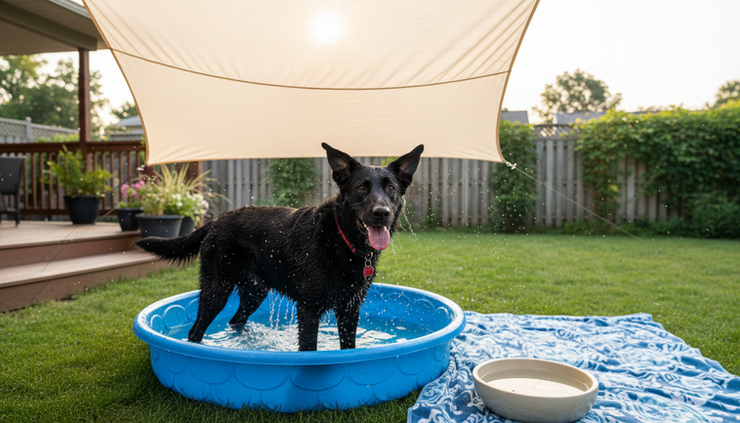
Shade from trees, canopies, umbrellas, or covered patios
Fans in well-ventilated indoor spaces
Cooling mats made for pets
Damp towels for a dog to lie on
Kiddie pools with shallow water
Misting systems or gentle hose sprays
Frozen enrichment toys
Air conditioning during extreme heat
Never force a dog into water. Some dogs love pools and sprinklers. Others find them stressful. Let the dog choose and keep water play calm.
Avoid using ice-cold water on an overheated dog’s whole body. Rapid chilling can cause problems. Cool, not freezing, water is safer for gradual cooling while seeking veterinary guidance.
Safe outdoor practices during high temperatures
Dogs still need movement, bathroom breaks, and mental stimulation. The trick is to adjust the routine when temperatures climb.
Walk during cooler parts of the day
Plan walks for early morning or later evening. Midday and afternoon heat can be the most intense, and pavement may stay hot long after the sun starts to drop.
Keep walks shorter than usual. Choose shaded routes and let the dog set a slower pace. If the dog wants to stop, sniff, or turn back, listen.
Skip intense exercise in heat
Fetch, running, biking, and long hikes can push a dog too hard in warm weather. Many dogs will keep playing because they are excited, even when their bodies are struggling.
On hot days, replace hard exercise with lower-risk activities:
Short sniff walks
Indoor training games
Puzzle toys
Hide-and-seek with treats
Gentle tug in a cool room
Frozen lick mats
Calm backyard time in the shade
Provide shade everywhere
Shade matters at home, at parks, at beaches, and on road trips. A dog tied in a sunny yard or left on an exposed patio can overheat quickly.
Good shade should be:
Large enough for the whole dog
Available as the sun moves
Paired with water
Well ventilated
On a cool surface, not hot concrete
A doghouse is not always safe in heat. Many doghouses trap warm air and can become stuffy. Open shade with airflow is usually better.
Never leave a dog in a parked car
A parked car can heat up quickly, even with windows cracked. This can become life-threatening in minutes. If the trip includes stops where the dog cannot come inside, leave the dog safely at home.
What to do if a dog is overheating
Fast action can save a dog’s life. If you notice signs of overheating, stop activity right away.
Take these steps:
Move the dog to a cooler place
Go indoors with air conditioning if possible. If not, move to full shade with airflow.
Offer small amounts of cool water
Let the dog drink, but do not force water into the mouth. Avoid letting the dog gulp huge amounts at once.
Begin gentle cooling
Wet the dog with cool water, especially the belly, paws, armpits, and groin area. Use a fan if available.
Do not cover the dog with heavy wet towels
Heavy towels can trap heat if they are left in place. If you use a damp towel, keep it light and remove or refresh it often.
Call a veterinarian
A dog may need medical care even if symptoms seem to improve. Heat illness can affect organs and worsen after the dog appears calmer.
Seek urgent veterinary help if you see collapse, seizures, severe weakness, repeated vomiting, bloody diarrhea, confusion, or gums that look pale, gray, blue, or very dark red.
This information is for general education and does not replace veterinary care. When in doubt, call a veterinarian or emergency clinic.
Long-haired breeds need smart heat management
Long-haired dogs and double-coated breeds need special care in warm weather. Their coats can trap heat, but they can also protect the skin from sun and help insulate against temperature changes.
Common long-haired or double-coated dogs include Golden Retrievers, Border Collies, Australian Shepherds, Huskies, Malamutes, Collies, Newfoundlands, Samoyeds, and many mixed breeds.
Brush out loose coat
Regular brushing removes dead hair and helps air move through the coat. Mats are a problem because they trap heat and hold moisture against the skin. A matted coat can make cooling harder and increase skin irritation.
During shedding season, brushing may need to happen several times a week. Some dogs benefit from professional grooming, especially if their coat is thick or prone to mats.
Be careful with shaving
Do not shave a double-coated dog without veterinary or professional grooming advice. Shaving can interfere with normal coat function and may increase sunburn risk. It can also change the way the coat grows back.
Trimming certain areas, removing mats, and keeping the coat clean may be safer than a full shave.
Watch them earlier and more often
Long-haired dogs may show heat stress sooner during walks, hikes, or yard play. Take breaks before the dog seems tired. Bring water, stay in shade, and avoid heavy exercise in warm weather.

Dogs can get sunburn too
Dogs with short hair, thin coats, light-colored coats, or exposed skin are more likely to get sunburn. Vulnerable areas include the nose, ears, belly, groin, eyelids, and any shaved or sparse patches.
Sunburn can cause redness, tenderness, peeling, and discomfort. Repeated sun damage may also raise the risk of skin problems over time.
Protective steps include:
Keeping dogs out of direct sun during peak heat
Using shade at parks, beaches, and backyards
Choosing walks in shaded areas
Using dog-safe sunscreen on exposed skin
Dressing sensitive dogs in lightweight UV-protective shirts
Avoiding unnecessary shaving
Asking a veterinarian about protection for dogs with skin conditions
Never use human sunscreen without checking that it is safe for dogs. Some products contain ingredients that can be harmful if licked. Choose a pet-safe sunscreen and apply it as directed.
A simple hot-weather safety checklist
Before heading outside on a hot day, run through a quick check:
Safety check | What to do |
Pavement | Use the seven-second hand test before walking |
Water | Bring cool water and a portable bowl |
Timing | Walk early morning or late evening |
Shade | Plan routes with trees, grass, or covered rest areas |
Activity | Keep exercise short and gentle |
Coat care | Brush long-haired dogs and remove mats |
Skin protection | Use shade, dog-safe sunscreen, or UV clothing when needed |
Warning signs | Stop at heavy panting, weakness, wobbling, or confusion |
Heat safety is about paying attention early. A dog does not need to collapse before the situation matters. Slowing down, finding shade, testing pavement, and offering water can prevent a scary emergency.
Hot weather can still be enjoyable for dogs, but it calls for a different pace. Choose cooler hours, protect paws and skin, keep water close, and take every warning sign seriously. A comfortable dog will move easily, breathe normally after rest, drink calmly, and seek connection rather than struggle through the heat.


Comments